
Illegal Garnishee Orders in the Western Cape
Updated July 2025
Your Content Goes Here
Summary of Key Ruling (Western Cape High Court)
A groundbreaking interim judgment delivered on June 4, 2025, confirms that garnishee (emolument attachment) orders issued from courts outside the employee’s workplace jurisdiction remain unenforceable until the Constitutional Court makes a final pronouncement.
What Are Illegal Garnishee Orders?
Illegal garnishee orders—also known as unlawful emolument attachment orders (EAOs)—are court orders forcing employers to deduct money from employees’ salaries to pay off debt. Many of these orders are issued unfairly or unlawfully, leaving employees with little to no income to survive on.
What Happened in the Western Cape High Court? (June 2025)
In a key case (ZAWCHC 244/2025), two employers from the Western Cape challenged garnishee orders issued by courts in Gauteng, which told them to deduct money from their employees’ salaries—even though the employees lived and worked in the Western Cape.
They argued that:
The orders were approved by clerks, not magistrates.
The employees were never properly notified or given a chance to defend themselves.
The orders came from outside the legal jurisdiction of the employees.
The Western Cape High Court agreed, stating that:
This gives both employers and employees protection from potentially fraudulent or abusive deductions.
2025 Garnishee Order Law Changes Every Employer and Employee Must Know
This case is about fairness and proper legal process:
Employees should only have money deducted from their salary if they’ve had a chance to respond in a local court.
Employers shouldn’t be forced to obey court orders that aren’t legally sound.
Debt collectors shouldn’t be able to use courts far away to sneak through dodgy deductions.
2025 Salary Deduction & Garnishee Order Updates in South Africa
Jurisdictional Rules Strengthened
Garnishee orders must now be issued in the area where the employee lives or works. If it comes from another province, it’s not enforceable—for now.Judicial Oversight Required
Only a magistrate or judge can sign off on a valid EAO. Orders from court clerks are invalid.Deductions Capped at 25%
South African law now caps garnishee deductions to 25% of an employee’s basic monthly salary, preventing extreme hardship.
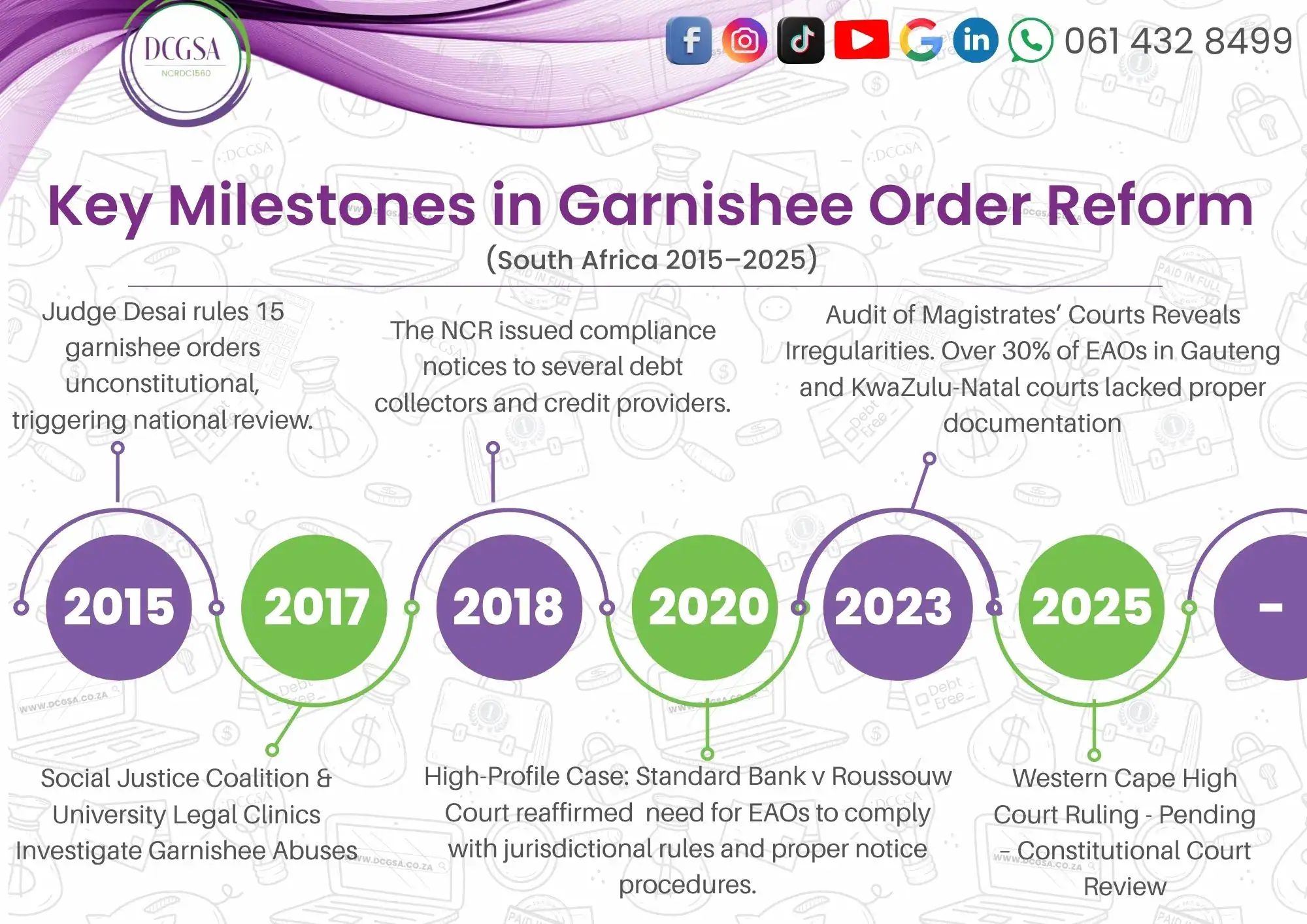
Garnishee Order Compliance: What Western Cape Employers Must Do in 2025
Don’t implement EAOs unless they:
Come from a local court;
Are signed by a judge/magistrate;
Comply with the 25% salary cap.
Audit all existing orders: If you’re deducting based on a Gauteng or KZN court order, you may be at risk of legal non-compliance.
Consult legal counsel before processing new deductions.
Stay informed: The Constitutional Court’s ruling will likely set the national standard going forward.
Garnishee Orders in 2025: What South African Employees Need to Know
If your salary is being garnished:
Check if the order came from your local court;
Request a copy and check if it was signed by a magistrate (not just a clerk);
Know your rights—no more than 25% of your basic pay can be deducted.
You can contact organisations like DCGsa for help in reviewing or challenging unlawful garnishee orders.
Original Article (2019–2024)
Illegal Garnishee Orders: Key Ruling for Western Cape Employers
Illegal garnishee orders, also known as unlawful salary deductions, have long been a concern for employees and employers alike. A recent ruling in the Western Cape High Court has provided much-needed clarity on these invalid EAOs, emphasizing the need for legal compliance and transparency in salary deductions.
Key Challenges with Garnishee Orders
1️⃣ Jurisdiction Issues:
Many garnishee orders are issued in jurisdictions far from the employee’s residence. This practice makes it nearly impossible for employees to defend themselves or attend court hearings, resulting in unjustified wage garnishments.
2️⃣ Approval Process:
Some garnishee orders are approved by court clerks without proper judicial oversight. These non-compliant garnishee orders often bypass the checks required to ensure their validity, raising concerns about fraudulent practices.
What This Means for Employers in the Western Cape
The Western Cape High Court ruled that employers do not have to implement garnishee orders from outside jurisdictions until the Constitutional Court makes a final decision. This judgment protects employers from enforcing improper salary attachments while the legality of such orders is under review.
Take Action
Employers should:
- Verify the jurisdiction and legitimacy of any garnishee orders.
- Seek legal advice when uncertain about the validity of orders.
- Stay informed about updates from the Constitutional Court.
📍 For more updates on garnishee orders and debt-related news, visit DCGsa.
Read more about the above article on DebtFreeDigi
